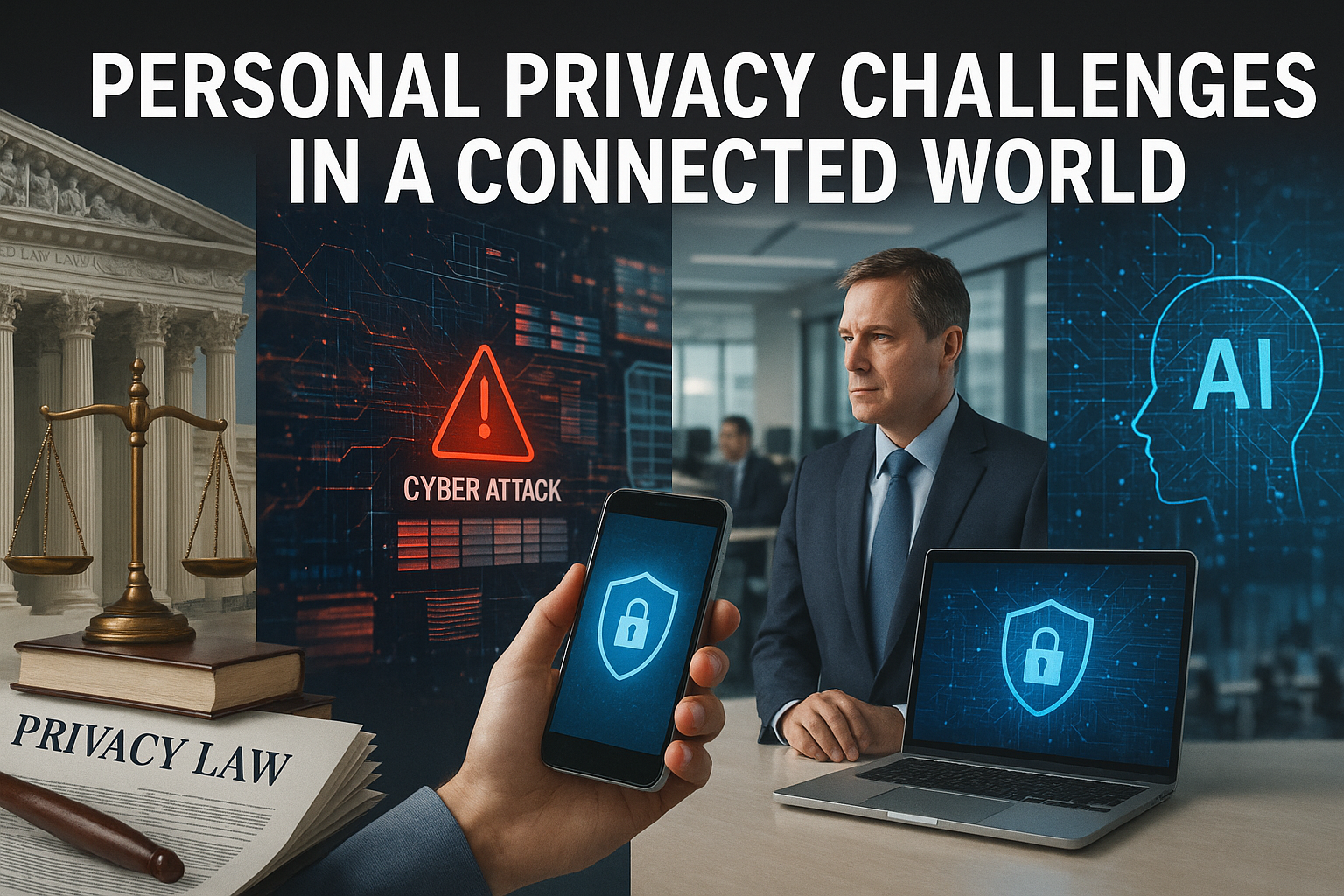

Personal Privacy Challenges in a Connected World
In an age where digital connectivity permeates every aspect of our lives, personal privacy has become a topic of heated debate. Every day, billions of data points are generated by smartphones, smart devices, and online interactions. While these technological advancements enhance convenience, they often come at the cost of individual privacy. The increasing dependence on digital platforms raises significant questions regarding how personal information is collected, stored, and utilized.
As businesses and consumers navigate this connected landscape, the ramifications of inadequate data privacy and cybersecurity measures become increasingly apparent. Personal privacy challenges are not just a concern for individuals; they extend to businesses that rely on consumer trust to thrive. Understanding the current landscape of data privacy, evolving regulations, and cyber risks is essential for sustaining ethical practices and complying with legal requirements. This article delves into the complexities of personal privacy in our digital world, exploring the potential risks and seeking solutions to safeguard our information.
The Evolution of Data Privacy
The concept of data privacy has evolved significantly over the past two decades. Traditionally, privacy was viewed through the lens of physical space—locked doors and restricted access. However, with the emergence of the internet and mobile technology, privacy has extended into the digital realm. Consumers are now faced with new dilemmas about how much of their personal information they are willing to share.
Historical Context
In the early days of the internet, data privacy was largely unregulated. Users willingly provided their information in exchange for free services, often without understanding the implications. This imbalance began to shift with high-profile data breaches and scandals, notably the Cambridge Analytica incident in 2016, which exposed the mishandling of personal data and sparked global outrage. As awareness grew, so did the demand for robust data protection regulations.
Regulatory Developments Impacting Consumer Privacy
Governments and regulatory agencies have begun to respond to consumer concerns about data privacy with legislation aimed at protecting personal information. Notable laws include the General Data Protection Regulation (GDPR) in Europe, the California Consumer Privacy Act (CCPA) in the United States, and various other state-level regulations.
Understanding GDPR
The GDPR, implemented in May 2018, is one of the most comprehensive data protection laws worldwide. It grants individuals greater control over their personal data and imposes strict penalties on organizations that fail to comply. Companies that collect, process, or store data from EU citizens must adhere to stringent guidelines regarding consent, data access, and processing transparency.
CCPA’s Role in Consumer Protection
On the other side of the Atlantic, the CCPA, enacted in January 2020, empowers California residents with rights over their personal information. Key provisions include the right to know what data is collected, the right to delete personal information, and the right to opt out of data selling. The CCPA has set a precedent, influencing other states to consider similar legislation.
The Business Implications of Consumer Privacy
As privacy regulations have tightened, businesses are feeling the pressure to comply. Compliance is often not just a legal requirement but also a competitive advantage. Organizations that prioritize data privacy are more likely to build trust with their customers, leading to improved brand loyalty and customer retention.
Challenges of Compliance
Despite the clear benefits of compliance, many organizations struggle to keep up with evolving regulations. According to a survey conducted by PwC, 84% of consumers are more concerned about data privacy than they were a year ago. At the same time, 69% of companies reported difficulties in complying with privacy laws.
This disconnect poses a real risk. Noncompliance can lead to heavy fines—under GDPR, organizations can face fines up to 4% of their annual global turnover. Consequently, businesses must invest in thorough data management policies, employee training, and updated technology to mitigate these risks.
The Rise of Cybersecurity Threats
Cybersecurity is intrinsically linked to data privacy. The more interconnected our devices become, the higher the risk of data breaches and cyberattacks. In 2021 alone, data breaches exposed over 22 billion records, indicating a serious threat to both organizations and individuals.
Types of Cybersecurity Risks
- Phishing Attacks: Cybercriminals use deceptive emails or messages to trick users into providing personal information.
- Ransomware: Malicious software locks users out of their systems until a ransom is paid.
- Data Breaches: Unauthorized access to confidential data can lead to the exposure of sensitive information.
The financial and reputational costs of these threats are significant. Organizations not only face direct losses but also potential legal liabilities and damage to their brand reputation. For individuals, the risks extend to identity theft and loss of personal security.
Consumer Awareness and Digital Rights
In light of these challenges, consumer awareness is paramount. Individuals must equip themselves with knowledge about their digital rights and the potential risks associated with sharing personal information online.
Empowering Consumers
There is a growing movement advocating for digital rights, emphasizing that individuals have the right to control their personal data. Education campaigns aim to inform consumers about how to protect their privacy online, including the use of strong passwords, two-factor authentication, and encrypted communications.
- Educate Yourself: Understanding the basics of data privacy can help individuals make informed decisions.
- Limit Data Sharing: Be cautious about what personal information is shared on social platforms.
- Monitor Privacy Settings: Regularly review and update privacy settings on devices and accounts.
The Future of Personal Privacy
As we look to the future, the landscape of personal privacy will likely continue to evolve. Emerging technologies such as artificial intelligence and the Internet of Things (IoT) offer both opportunities and challenges for privacy management. While these technologies can improve efficiency and innovation, they also create new data vulnerabilities.
Anticipating Change
Experts predict that we will see an increased emphasis on privacy by design, where data privacy becomes an integral part of technology development. Organizations may adopt more advanced technologies, such as blockchain, to enhance data security and ensure transparency in data transactions.
Furthermore, as legislative frameworks continue to develop, there will likely be more global coordination on data privacy standards. This collaboration could help harmonize regulations across borders, making it easier for businesses to navigate compliance while empowering consumers with consistent privacy rights.
The Balance Between Privacy and Innovation
In this interconnected world, finding a balance between personal privacy and technological advancement is crucial. Businesses must adopt ethical data practices that respect consumer privacy while fostering innovation. Strong leadership, investment in cybersecurity, and a commitment to transparency will play pivotal roles in navigating this complex landscape.
As consumers become more aware of their rights and demand greater protection, we may see a shift toward more responsible data stewardship. Organizations that embrace this change will likely stand out in a crowded marketplace, gaining customer trust and loyalty in the process.
Ultimately, the landscape of personal privacy challenges will continue to evolve, influenced by technology, regulatory shifts, and consumer expectations. Remaining informed about these developments is critical for both individuals and businesses. Through vigilance and responsible practices, we can work towards a future where personal privacy is safeguarded in a connected world.